

Kitchen Cabinet Sizes in Australia: Complete Dimensions Guide
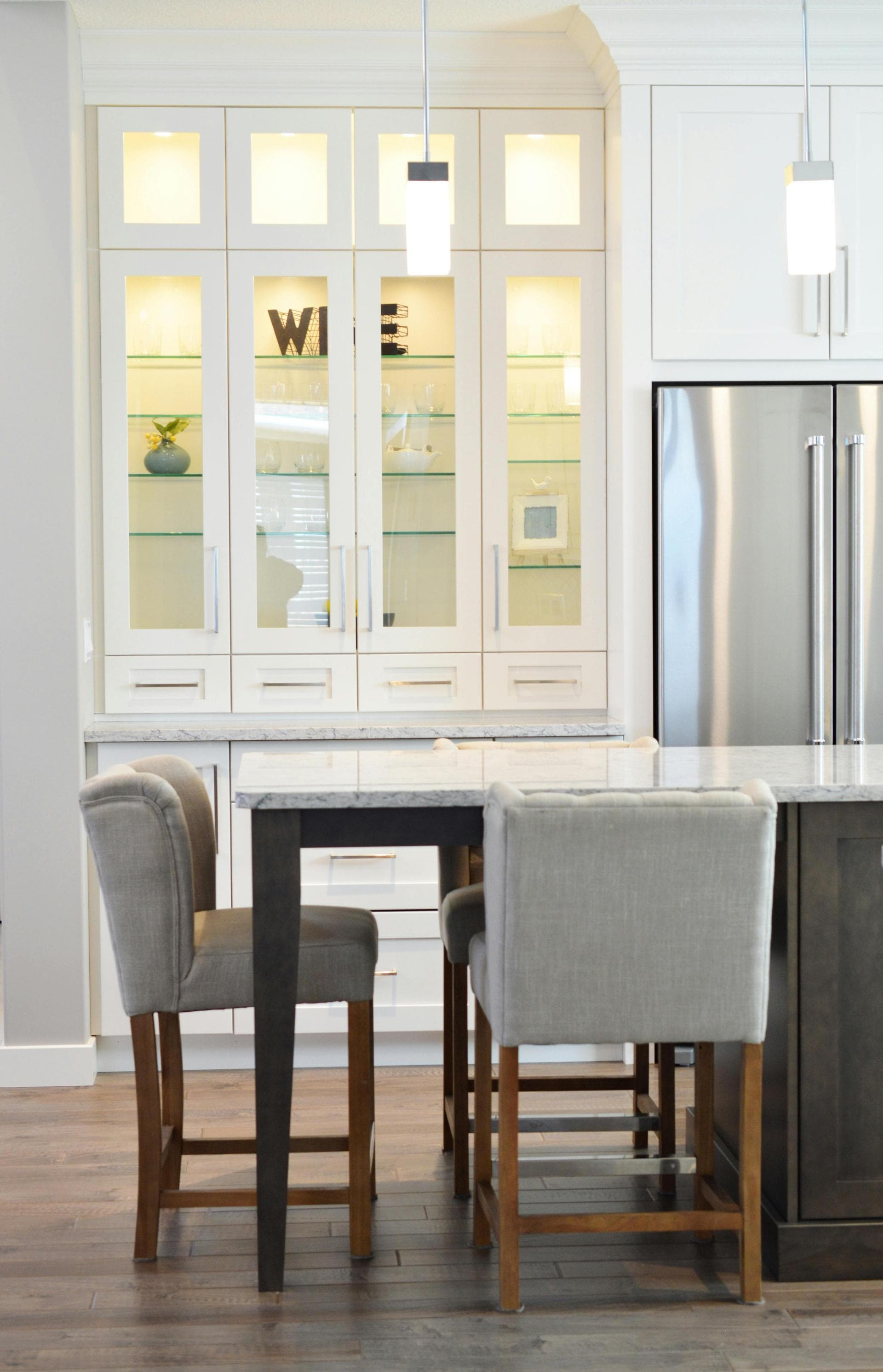
Understanding standard Australian kitchen cabinet sizes is essential for planning your renovation. This guide covers base, wall, and tall cabinet dimensions, plus how to handle non-standard spaces.
Standard Base Cabinet Sizes in Australia
Base cabinets sit on the floor and support your benchtop. They bear the most weight and house the most-used storage in your kitchen. Standard Dimensions: - Height: 720mm (cabinet box only, without kick board or benchtop) - Total height with kick board (150mm) and benchtop (20-40mm): 890-910mm - Depth: 560-580mm (to allow for a standard 600mm benchtop with a small overhang at the front) - Kick board height: 150mm (standard) or 100mm (compact) Standard Widths (in millimetres): - 150mm (narrow pull-out / spice rack) - 300mm (single door) - 450mm (single door with internal shelf) - 600mm (double door — the most common base unit) - 750mm (wide single drawer stack or sink base) - 900mm (wide unit, commonly used under cooktops) - 1000mm (extra-wide unit) - 1200mm (large sink cabinet or corner unit front) Sink Base Cabinets: Typically 600mm or 900mm wide, with a false drawer front and no internal shelf to allow space for plumbing. Corner Base Cabinets: Standard 900mm x 900mm footprint for a blind corner or lazy Susan configuration. L-shaped corner units require a 900mm return on each wall. The 720mm box height combined with a 150mm kick board gives a benchtop height of approximately 900mm — the standard ergonomic working height adopted across Australia and in line with Australian Standard AS 4386.
Standard Wall Cabinet Sizes in Australia
Wall cabinets (also called overhead cabinets) mount to the wall above your benchtop and provide additional storage for everyday items. Standard Dimensions: - Heights: 600mm, 720mm, or 900mm (720mm is the most common) - Depth: 300-350mm (shallower than base cabinets to avoid head bumps) - Mounting height: Bottom of cabinet sits 500-600mm above the benchtop surface Standard Widths (same increments as base units): - 300mm, 400mm, 450mm, 600mm, 750mm, 900mm Rangehood Cabinet: Typically 600mm or 900mm wide to match the cooktop below, with a shorter height (300-400mm) to accommodate the rangehood unit. Over-Fridge Cabinet: Typically 600mm wide and 300-400mm tall, mounted above the fridge cavity to maximise storage. Height Selection Guide: - Standard 2400mm ceiling: Use 720mm wall cabinets with a pelmet or gap to the ceiling - Standard 2400mm ceiling (no gap): Use 900mm wall cabinets that reach the ceiling - Higher 2700mm+ ceilings: Stack two rows or use 900mm cabinets with a decorative bulkhead above In most Perth homes with standard 2400mm ceilings, 720mm wall cabinets mounted 500mm above the benchtop leave a small gap at the ceiling that can be closed with a pelmet, bulkhead, or crown moulding.
Tall Cabinet and Pantry Sizes
Tall cabinets (also called full-height or tower units) span from the floor to near the ceiling and are used for pantries, ovens, fridges, and broom cupboards. Standard Heights: - 2100mm (stops below standard overhead cabinets) - 2400mm (floor to ceiling in standard Australian homes) Standard Widths: - 450mm (narrow pantry pull-out) - 600mm (standard single-door pantry or oven tower) - 900mm (double-door pantry) Standard Depth: - 580mm (matching base cabinet depth for a flush front line) Oven Tower Configuration: A standard 600mm-wide tall cabinet houses a built-in oven at a comfortable height (usually the oven opening centred at 900-1200mm from the floor) with storage above and below. This avoids bending down to a floor-level oven. Fridge Cavity: Most Australian fridges require a 600mm, 700mm, or 900mm wide opening. Always check your fridge dimensions before ordering cabinetry — allow 20-50mm clearance on each side for ventilation. Standard fridge cavity height is 1800-2100mm. Pull-Out Pantry: Narrow 150-300mm wide tall cabinets work brilliantly as pull-out spice or pantry towers, making use of space that would otherwise be wasted as a filler strip.
How to Handle Non-Standard Kitchen Spaces
Real kitchens rarely have perfectly round-number dimensions. Here's how professional kitchen designers handle the gaps. Filler Strips: When a run of standard-width cabinets doesn't perfectly fill a wall, filler strips (typically 30-100mm wide) are used to cover the remaining gap. These are scribed to match uneven wall surfaces and finished to match the cabinet colour. Order extra filler material when purchasing your cabinets. Non-Standard Widths: Some cabinet suppliers (including Hanova) offer intermediate widths or can cut down standard units. If your layout needs a 500mm-wide base unit and only 450mm and 600mm are standard, a 600mm unit can sometimes be modified, or a 450mm unit paired with a 50mm filler. Ceiling Height Variations: In older Perth homes, ceiling heights can vary from 2400mm to 3000mm+. Measure at multiple points along the wall. Use the lowest point to set wall cabinet height, and fill any gap above with a bulkhead, crown moulding, or additional storage boxes. Sloping Floors: Measure floor level at multiple points. Set your base cabinet height from the floor's highest point and shim all other cabinets up to match. Our installation guide covers this process in detail. Corner Situations: Blind corners (where one run of cabinets meets a perpendicular wall) need at least 100mm of clearance for doors and drawers to open without hitting the adjacent cabinet. Measure this carefully during planning.
Kitchen Cabinet Size Quick Reference Table
Use this reference when planning your Australian kitchen layout: Base Cabinets: - Box height: 720mm - Box depth: 560-580mm - Kick board: 150mm - Total height to benchtop: ~900mm - Common widths: 300, 450, 600, 750, 900, 1200mm Wall Cabinets: - Common heights: 600, 720, 900mm - Box depth: 300-350mm - Mounted: 500-600mm above benchtop - Common widths: 300, 400, 450, 600, 750, 900mm Tall Cabinets: - Heights: 2100mm or 2400mm - Box depth: 580mm - Common widths: 450, 600, 900mm Benchtop: - Standard depth: 600mm - Island depth: 900-1200mm - Standard thickness: 20mm (laminate) or 20-40mm (stone) Appliance Openings: - Built-in oven: 600mm wide x 600mm high - Microwave niche: 600mm wide x 380mm high - Dishwasher: 600mm wide x 820mm high - Standard fridge: 600-900mm wide x 1800-2100mm high These dimensions align with standard Australian appliance sizes and ergonomic guidelines. When ordering Hanova RTA cabinets, our configurator uses these standard sizes with filler options for a custom fit in your space.
Explore Our Products
Ready to start your cabinet project? Browse our range:
Related Articles
5 Essential Tips for Cabinet Maintenance
Want your cabinets to look new for years to come? These 5 simple maintenance strategies will extend the life and beauty of your investment.
Maximizing Small Kitchen Spaces: Expert Tips and Solutions
Wondering how to make the most of your small kitchen? Here are proven strategies to transform limited space into a functional, beautiful cooking area.
The Ultimate Guide to Cabinet Finishes: Making the Right Choice
Confused about which cabinet finish is right for your home? Here's how to select the perfect finish balancing style, durability, and maintenance needs.