

Best Kitchen Cabinet Materials: A Complete Comparison for Australian Homes
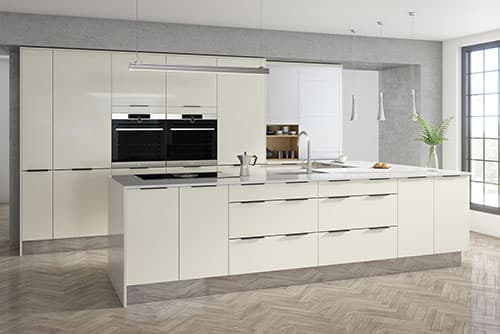
Choosing the right cabinet material affects durability, appearance, and cost. Compare plywood, MDF, particleboard, solid timber, and more to find the best kitchen cabinet materials for your home.
Plywood: The Gold Standard for Kitchen Cabinet Materials
Plywood is widely considered the best material for kitchen cabinet boxes, and for good reason. It's made from multiple thin layers of timber veneer glued together with alternating grain directions, giving it exceptional strength and dimensional stability. Why Plywood Excels in Kitchens: - Moisture resistance: Cross-laminated layers resist swelling and warping far better than particleboard - Screw holding: The layered structure grips screws firmly, so hinges and hardware stay tight for years - Weight capacity: Plywood shelves resist sagging under heavy loads like stacked plates and appliances - Longevity: A well-built plywood cabinet easily lasts 20-30 years in a kitchen environment Cost: $$$ Plywood cabinets cost 20-40% more than particleboard equivalents. A standard base unit in plywood typically runs $180-350 depending on grade and finish. Best For: Kitchen cabinet boxes, drawer boxes, sink cabinets (where moisture exposure is highest), and any cabinet that will carry heavy loads. Hanova's RTA kitchen cabinets use furniture-grade plywood for all cabinet boxes, ensuring long-term durability even in high-moisture areas around sinks and dishwashers.
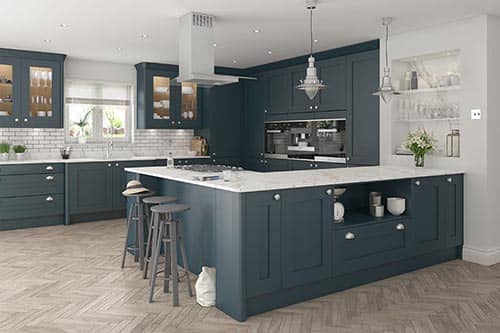
MDF (Medium-Density Fibreboard): Best for Painted Doors
MDF is an engineered wood product made from fine timber fibres bonded with resin under heat and pressure. It produces an exceptionally smooth, uniform surface that takes paint beautifully — which is why most painted cabinet doors in Australia are made from MDF. Strengths: - Perfectly smooth surface with no grain pattern showing through paint - Machines cleanly for routed profiles like shaker-style doors - Dimensionally stable — won't expand or contract across its face like solid timber - More affordable than solid timber for door production Limitations: - Standard MDF absorbs moisture quickly and swells permanently - Heavier than plywood of the same thickness - Edges are vulnerable to damage if not properly sealed - Cannot hold screws as well as plywood in cabinet box applications Cost: $$ MDF doors are typically $40-80 per door depending on size and profile complexity. Best For: Cabinet doors (especially painted finishes), decorative panels, and shelving in dry areas. Always specify moisture-resistant MDF (often labelled "MR MDF" or green-core) for kitchen and bathroom applications.
Particleboard: Budget-Friendly but Limited
Particleboard (also called chipboard) is made from wood particles bonded with resin. It's the most affordable cabinet material and appears in many flat pack and budget kitchen ranges across Australia. Where Particleboard Works: - Internal shelves in dry locations - Cabinet backs where structural demands are low - Budget renovations where cost is the primary concern - Rental property kitchens with a shorter expected lifespan Where Particleboard Fails: - Under sinks and near dishwashers — any water exposure causes irreversible swelling - Heavy-load shelves — particleboard sags over time under sustained weight - Hinge mounting points — screws can strip out after repeated door opening - High-humidity areas like bathrooms and laundries without moisture-resistant grades Cost: $ The most affordable option. Particleboard cabinet boxes typically run $80-150 per unit. Verdict: Acceptable for temporary or budget kitchens, but not recommended for a kitchen you want to last 15+ years. If you do use particleboard, always specify moisture-resistant grade (usually branded as "HMR" — high moisture resistant).
Solid Timber: Beautiful but High-Maintenance
Solid timber cabinets — made from species like Tasmanian oak, Victorian ash, or imported hardwoods — offer unmatched warmth and character. Each piece has unique grain patterns that engineered materials can't replicate. Advantages: - Natural beauty and warmth that improves with age - Can be sanded and refinished multiple times over its lifetime - Excellent screw-holding strength - High perceived value and premium aesthetic Challenges in Australian Conditions: - Timber expands and contracts with humidity changes, which can cause doors to warp, stick, or develop gaps - Requires regular oiling or sealing to maintain finish - Significantly heavier than engineered alternatives - Cost is substantially higher than all other options Cost: $$$$ Solid timber cabinets are the most expensive option, typically 2-3x the cost of plywood equivalents. Best For: Feature doors on an island or display cabinet, heritage home restorations, and homeowners who value natural materials and are willing to maintain them. For the cabinet box itself, plywood remains a better structural choice even with timber doors.
Thermofoil and Laminate: Low-Cost Door Finishes
Thermofoil (vinyl-wrapped MDF) and laminate (high-pressure laminate bonded to substrate) are popular door finishes that offer consistent colour and pattern at a lower price point than paint or timber. Thermofoil Doors: - Vinyl film heat-formed over MDF core - No visible seams on the face - Highly moisture-resistant surface - Risk: Heat from ovens and toasters can cause the vinyl to peel or bubble - Cost: $30-60 per door High-Pressure Laminate (HPL): - Durable laminate sheet bonded to particleboard or MDF - Wide range of colours, woodgrains, and stone-look finishes - Scratch and stain resistant surface - Visible edge banding (seam) on door edges - Cost: $35-70 per door Both thermofoil and HPL are well-suited to kitchens and bathrooms where easy cleaning matters. For the cabinet box, the substrate underneath determines structural quality — always check what's behind the decorative surface.
Which Kitchen Cabinet Material Should You Choose?
The best approach for most Australian kitchens is a combination of materials, using each where it performs best: Cabinet Boxes (Carcasses): Plywood. This is where structural integrity and moisture resistance matter most. The 20-40% premium over particleboard pays for itself in longevity. Cabinet Doors: MDF with paint or thermofoil for a clean, modern look. Solid timber for a natural, premium aesthetic. Choose based on your style preference and maintenance willingness. Drawer Boxes: Plywood or solid timber. Drawers take significant daily stress, so strong screw-holding and resistance to racking are essential. Shelves: Plywood for heavy-load areas (plates, appliances). MDF or particleboard is acceptable for light-use pantry shelves. Budget Strategy: If your entire budget doesn't stretch to plywood everywhere, prioritise plywood for the sink cabinet, any cabinet near the dishwasher, and drawer boxes. Use moisture-resistant particleboard elsewhere. Hanova's RTA cabinets are built with plywood boxes and MDF shaker doors as standard — a combination that balances performance, aesthetics, and value for Australian conditions. Browse our kitchen cabinet range to see the options available.
Explore Our Products
Ready to start your cabinet project? Browse our range:
Related Articles
5 Essential Tips for Cabinet Maintenance
Want your cabinets to look new for years to come? These 5 simple maintenance strategies will extend the life and beauty of your investment.
Maximizing Small Kitchen Spaces: Expert Tips and Solutions
Wondering how to make the most of your small kitchen? Here are proven strategies to transform limited space into a functional, beautiful cooking area.
The Ultimate Guide to Cabinet Finishes: Making the Right Choice
Confused about which cabinet finish is right for your home? Here's how to select the perfect finish balancing style, durability, and maintenance needs.